 Widely applicableGreat addition to other treatmentsGrid-shaped electrostatically charged tapes
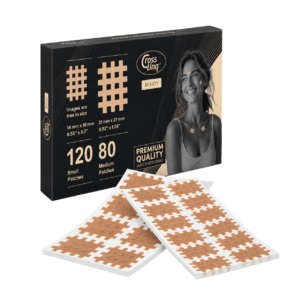
CrossLinq acupressure patches (also known as cross tape or grid patches) are small, grid-shaped patches that are applied to the skin to stimulate specific pressure points.
These patches are commonly used on trigger points, acupuncture points and areas of muscle tension. By stimulating the skin, they may help support microcirculation and reduce local tension in a natural, drug-free way.
CrossLinq patches are made from an ultra-thin, breathable material with a hypoallergenic adhesive. They are lightweight, skin-friendly and can typically be worn for several days.
Acupressure patches (cross tape) are widely used for:
– Trigger points and muscle tension
– Acupuncture and pressure points
– Areas of stiffness or reduced mobility
– Supporting daily recovery routines
They are suitable for both professional use and everyday application, and can be placed precisely on targeted areas of the body.
Showing all 6 results
 £14.95
Add to cart
£14.95
Add to cart
 £13.95
Add to cart
£13.95
Add to cart
 £13.95
Add to cart
£13.95
Add to cart
 £13.95
Add to cart
£13.95
Add to cart
 £38.95
Add to cart
£38.95
Add to cart
 £43.95
Add to cart
£43.95
Add to cart
 Apply the CrossLinq patch diagonally next to the ear, focusing on the sensitive area.
 Place two patches on both sides above the collarbone to target areas of tension.
 Apply two patches along the natural skin fold created when bending the arm, and slightly further along the arm.
Would you like to learn more about applying CrossLinq yourself?
Click here to visit the CrossLinq self-application page.
Material:
Apply two patches along the natural skin fold created when bending the arm, and slightly further along the arm.
Would you like to learn more about applying CrossLinq yourself?
Click here to visit the CrossLinq self-application page.
Material:
 The grid structure of CrossLinq patches is based on Yin and Yang principles:


 Form a ring using your thumb and index finger.
 Apply resistance and assess the strength.
 Apply the patch to the left and repeat.
 Repeat on the right side.
CrossLinq patches work by stimulating acupressure points on the skin and helping to provide relief from pain and discomfort.
You can use CrossLinq patches on any area of the body. If you want to learn more about how to apply CrossLinq patches, get our manual where we explain all the applications for CrossLinq.
The benefits of using CrossLinq patches include reducing pain, relaxing muscles, improving circulation, and promoting healing.


